





Region


Bedankt voor uw offerte aanvraag. U ontvangt binnenkort alle praktische informatie over de training, inclusief datum suggesties en voorbereidingstips.
We kijken ernaar uit u te ontmoeten en samen te werken aan kennis die direct toepasbaar is in de praktijk.

5 min read
ExpertDesk - Answers that go beyond
Not every question has a standard answer. Sometimes you face complex challenges where legislation, practice, and strategy intersect. The ExpertDesk is designed for exactly those moments. Here, we combine knowledge from different areas of expertise and make complex questions understandable and applicable. The goal: clarity, confidence, and direction for organisations that do not settle for half answers.

5 min read
What can you say, and how?
Consumers make purchasing decisions based on what they see and read. That is why commercial texts and visuals on packaging are just as sensitive as ingredient information. They must be accurate, substantiated, and legally compliant, without misleading or exaggerating. Especially for food products, supplements, and functional products, the line between a claim and a suggestion is becoming increasingly strict. That is exactly why proper validation is essential.

5 min read
Food Labelling
Packaging is your first point of contact with the consumer and therefore also the first checkpoint for regulators. Every statement on a label must be accurate, clear, and compliant with national and international legislation. From ingredient lists to allergens, from origin to health claims, mistakes are easily made, but the consequences can be significant, ranging from recalls to reputational damage. Proper labelling therefore requires more than knowledge. It requires structure, validation, and forward thinking.

5 min read
From rules to direction
Laws and regulations define the rules of the game for food safety, labelling, and market access. They are not only there to be followed, but to safeguard what truly matters: trust, integrity, and safety. In a constantly evolving industry, compliance is the minimum requirement. Organisations that understand legislation, follow it, and stay ahead of it, build reputation, agility, and credibility.

5 min read
Language as the key to market access
A label does not only communicate what is in a product, it does so in the language of the consumer. Without accurate translation, a product simply cannot enter the market. Legislation requires labels to be clear and understandable in the country where the product is sold. Translation is therefore not just a practical step, but the key to trust, safety, and marketability.

5 min read
Proof that products comply
Before a product reaches the shelf, it must demonstrably meet strict quality requirements. Retailers, regulators, and consumers all seek assurance: is this product safe, reliable, and compliant with legislation? A marketability report provides that proof. It combines analyses of product characteristics with label verification and regulatory compliance. This not only enables market access, but also builds trust in both brand and product.

5 min read
Control over data, confidence across the chain
Product information is the backbone of the food industry. From ingredients and allergens to packaging details, retailers, regulators, and consumers expect accurate and up-to-date data. A well-structured specification management system prevents errors, accelerates processes, and strengthens trust across the entire supply chain. For both producers and retailers, it is the key to transparency and continuity.

5 min read
Logos that build trust
Logos on packaging are more than visual elements. They carry meaning. They build trust with consumers, guide choices in the supermarket, and demonstrate compliance with standards and regulations. But when a logo is used incorrectly, the effect can be the opposite. It can lead to confusion, doubt, or even legal consequences. Correct labelling is therefore not only about compliance. It directly impacts brand value and credibility.

5 min read
Proof that matters
A claim on packaging is powerful. It influences choices, builds trust, and helps products stand out. Whether it concerns nutritional values, health benefits, or sustainability, both consumers and regulators take a critical look. But with that power comes responsibility. Incorrect or unauthorised claims can lead to sanctions, reputational damage, and loss of credibility. Claims are therefore not just a legal requirement. They are a strategic tool.

5 min read
From creation to compliance
Packaging is often the first thing a consumer sees. It shapes trust, appeal, and marketability. But beyond design and brand storytelling, the content of commercial texts and visuals must also be accurate. Artwork that does not comply with regulations can lead to fines, product recalls, or even blocked market access. Strong artwork is therefore not only creative. It must also be legally sound.
5 min read
Transparency down to ingredient level
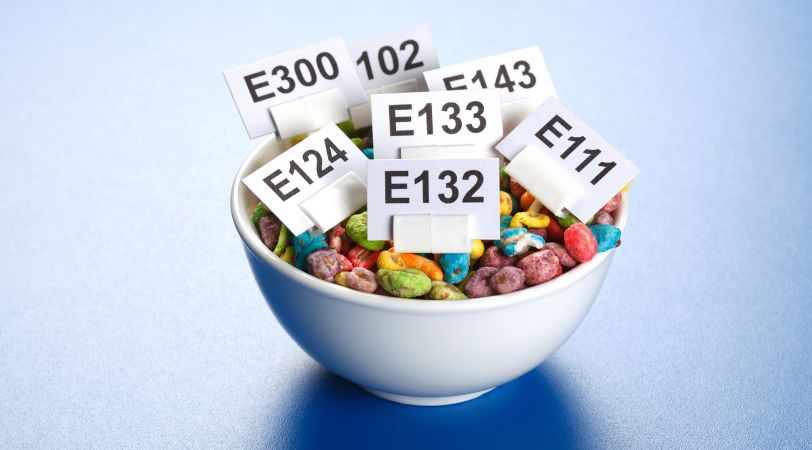
Additives play an essential role in many food products. They extend shelf life, enhance taste, and ensure the right texture. At the same time, every additive used is subject to strict legislation. Consumers expect clarity, and regulators demand compliance. The use of additives is therefore not just a technological choice. It is also about trust and compliance.

5 min read
Measuring what matters, where it matters
Control starts with insight. And insight starts with measurement. A well designed sampling plan forms the foundation for demonstrable food safety and product quality. Whether it concerns raw materials, finished products, or environmental hygiene, without structured sampling, every laboratory result remains a snapshot without context. The right sample, at the right moment, for the right reason. That is what a sampling plan is about.